It is very informative news that understanding wattage is the first step toward choosing the right solar system for your home or business to get free energy. In simple words, wattage tells you how much electricity a device can produce or consume.
Just like a wider water pipe allows more water to flow, a higher wattage solar panel generates more power. I physically see many solar panel sizes in different cities in Pakistan and know that their sizes and wattages are different.
For example, a 540W solar panel can produce 540 watts of electricity during strong sunlight, helping you run some appliances and reduce your electricity bill.
Today, most solar panels range between 550W and 580W for residential use, while larger panels are used for commercial purposes. Along with wattage, solar panel size also plays an important role.
It is also important to note that Residential solar panels are smaller and suitable for rooftops, while commercial solar panels are larger and more powerful. By understanding both wattage and solar panel sizes, you can make a smarter decision and get maximum energy from the sun.
What Does Solar Panel Wattage Mean?
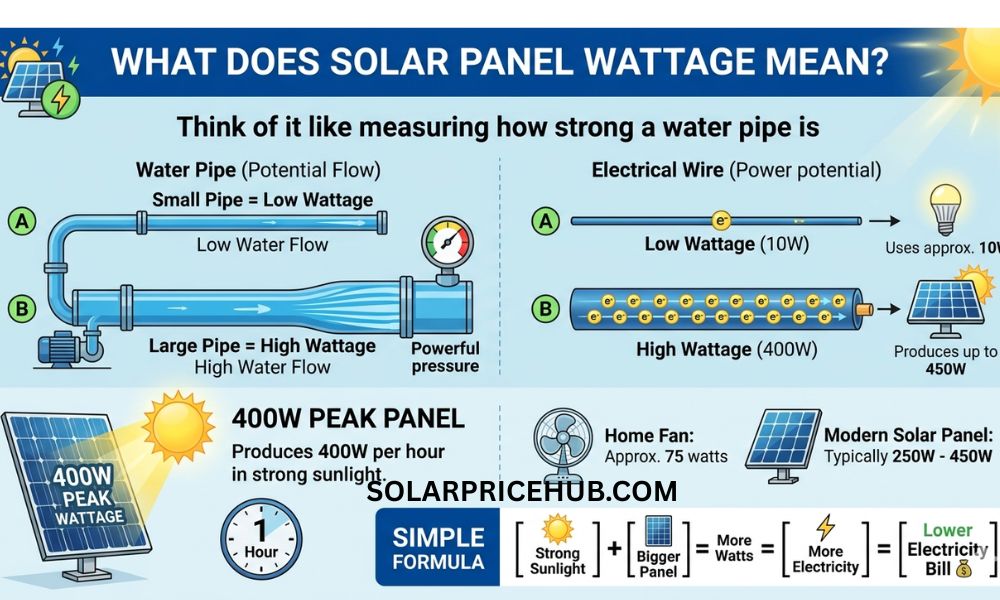
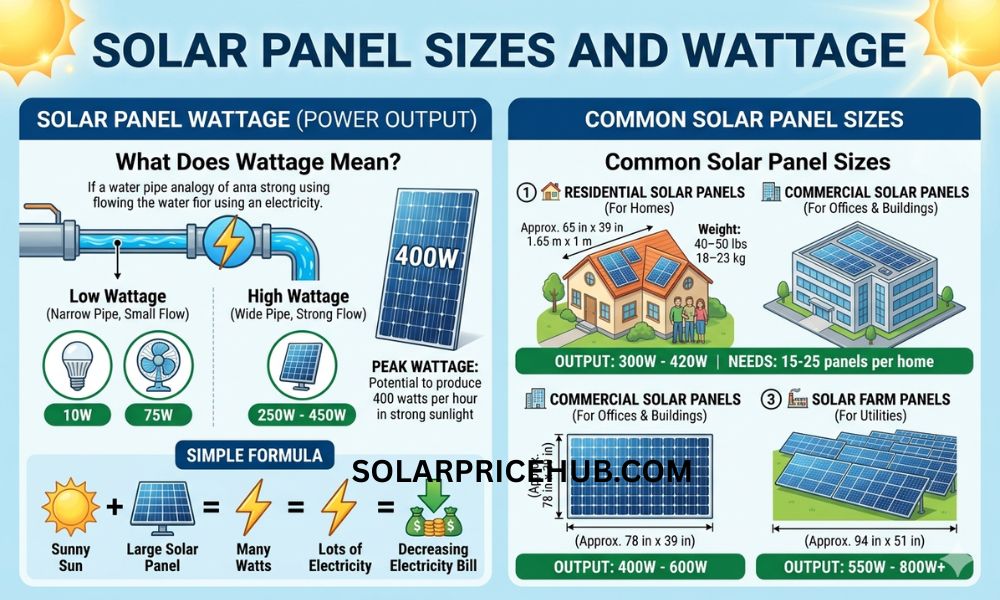
It is informative news that Wattage is just a way of measuring how much electricity something makes or uses. Think of it like measuring how strong a water pipe is — the bigger the pipe, the more water flows through. The higher the wattage, the more electricity a panel produces.
A small LED bulb uses about 10 watts. Your home fan might use 75 watts. A solar panel today usually makes between 250 and 450 watts of power when the sun is bright.
When you see “400W” written on a solar panel, it means the panel can produce 400 watts of electricity per hour when sunlight is strong. That is called the panel’s peak wattage.
📐 Simple Formula to Remember:
More Sunlight + Bigger Panel = More Watts = More Electricity = Lower Electricity Bill 💰
Modern solar panels on a residential rooftop produce clean electricity from sunlight.
Common Solar Panel Sizes
It is very important to note that Solar panels come in different sizes, just like shoes or clothes. The most common sizes are made for homes, businesses, or big power plants. Let’s look at them one by one:
Residential Solar Panels (For Homes)
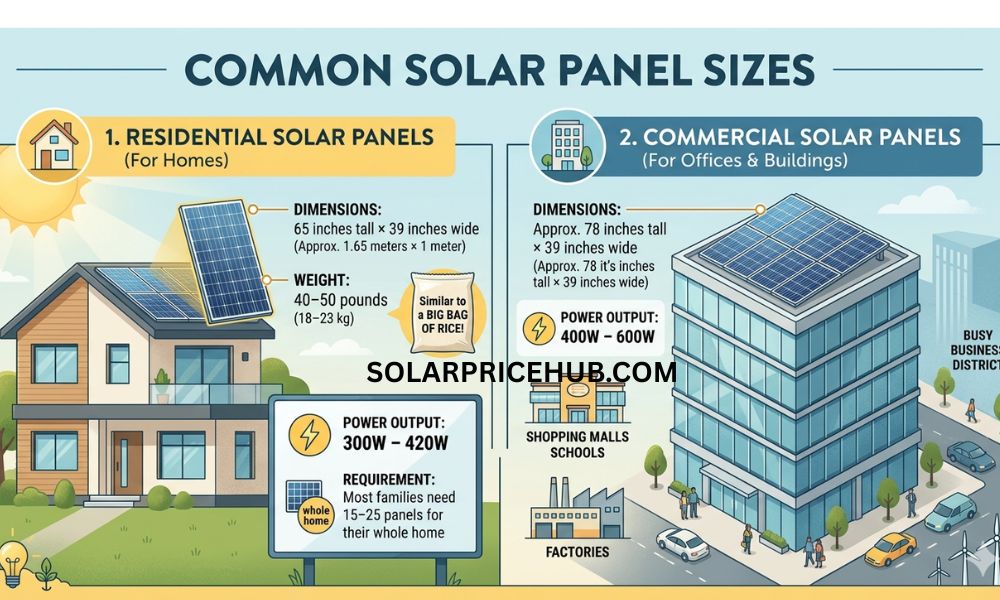
These are the solar panels you see on house rooftops in the world. They are usually about 65 inches tall and 39 inches wide (approximately 1.65 meters × 1 meter). They weigh about 40–50 pounds (18–23 kg) — similar to a big bag of rice!
These panels usually produce between 300W and 420W of power. Most families need about 15 to 25 panels to power their whole home.
Commercial Solar Panels (For Offices & Buildings)
These are bigger and taller — about 78 inches × 39 inches. They are used on large buildings, shopping malls, schools, and factories. They can produce 400W to 600W of electricity per panel.
Solar Panel Size & Wattage Understanding Table
Here is a quick and easy comparison table showing the most popular solar panel types, their sizes, and how much electricity they make:
| Panel Type | Size (inches) | Weight | Wattage Range | Best For |
|---|---|---|---|---|
| Small Residential | 47 × 21 | ~26 lbs | 100W – 200W | Small roofs, RVs, sheds |
| Standard Residential | 65 × 39 | ~42 lbs | 250W – 370W | Average family homes |
| High-Power Residential | 68 × 40 | ~50 lbs | 380W – 450W | Energy-saving homes |
| Commercial Standard | 78 × 39 | ~55 lbs | 400W – 500W | Offices, warehouses |
| Large Commercial | 85 × 44 | ~65 lbs | 500W – 700W | Factories, solar farms |
| Thin-Film Panel | Varies (flexible) | ~15 lbs | 80W – 150W | Curved surfaces, portable use |
Top Smart Tips for Buying Solar Panels
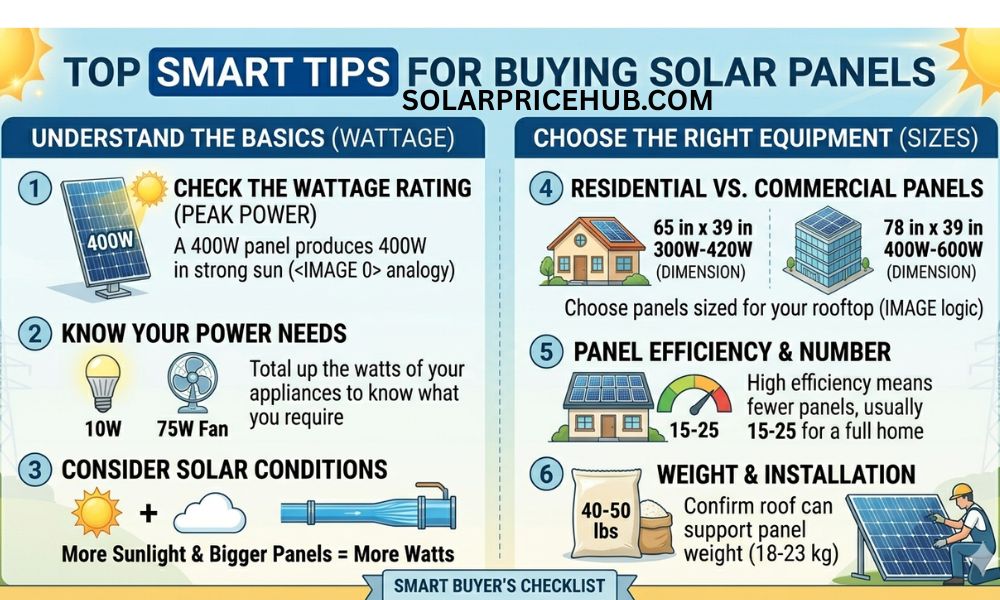
There are also many Top Smart Tips for Buying Solar Panels, and here we will discuss them one by one as follows.
1. Check Your Roof Direction
In the Northern Hemisphere (like the USA or Europe), solar panels work best when facing south. In the Southern Hemisphere (like Australia), they should face north. A south-facing roof gets the most sunlight throughout the day.
2. Look at the Efficiency Rating
Efficiency tells you how good a panel is at turning sunlight into electricity. Most home panels have an efficiency of 17% to 22%. Higher efficiency = more power in less space. Always choose above 19% if your budget allows.
3. Ask About the Warranty
Good solar panels come with a 25-year performance warranty. This means the company promises the panel will still make at least 80% of its original power after 25 years. Never buy panels with less than a 10-year warranty.
4. Think About Shading
Even a small shadow from a tree or chimney can cut a panel’s power by 50% or more! Before installing, make sure your roof gets full sunlight from morning to evening with as little shade as possible.
5. Don’t Forget the Inverter
Solar panels make DC electricity (direct current), but your home appliances need AC electricity (alternating current). You need a device called an inverter to change DC into AC. Make sure you buy a quality inverter along with your panels.
🌍 Did You Know? Pakistan, India, and the Middle East are some of the best places in the world for solar energy because they get 5–7 hours of strong sunlight almost every single day!
Final words
It is very informative news that understanding wattage is the first step toward choosing the right solar system for your home or business to get free energy. In simple words, wattage tells you how much electricity a device can produce or consume. Just like a wider water pipe allows more water to flow, a higher wattage solar panel generates more power.
For example, a 540W solar panel can produce 540 watts of electricity during strong sunlight, helping you run some appliances and reduce your electricity bill. Today, most solar panels range between 550W and 580W for residential use, while larger panels are used for commercial purposes. Along with wattage, solar panel size also plays an important role.