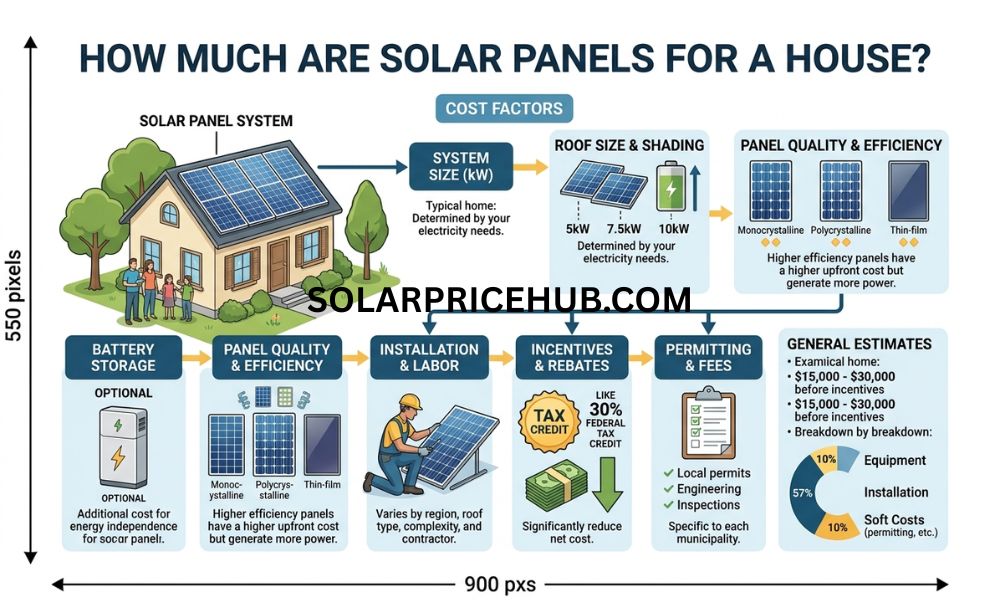
There are at least 6 to 8 of 540w to 585w Solar Panels for a House to fulfill energy needs. A house always needs 3k to 4k watts of electricity, including an AC during summer and 2k watts during winter.
For a big family house, we need to install a 6 kW solar system at home that will generate enough power to run all the appliances.
For a 6kw solar system, we need to install 12 solar panels of 540w or 585w that will generate 6000 watts very easily during the day and also recharge batteries for night use.
This system will run all fans, lights, LEDs, washing machine, water pump, iron, fridge, and an AC as well.
If you have a big family house with 2 ACs, then you need to install an 8 kW solar system because this system will generate 40 kW or 40 to 45 units in a day.
This huge solar system will run 2 ACs and all necessary appliances in your sweet home.
What Is Solar Panel Wattage?
Think of solar panel wattage like the horsepower of a car. The higher the wattage, the more electricity the panel can produce.
In 2026, most residential solar panels come in the range of 350W to 450W, with 400W+ panels being the most popular choice.
Now imagine two homes: one uses low-power panels (250W), and the other uses high-power panels (450W).
The second home will need fewer panels to generate the same electricity. That’s why wattage plays such a huge role in determining solar panel count.
How Solar Panels Generate Electricity?
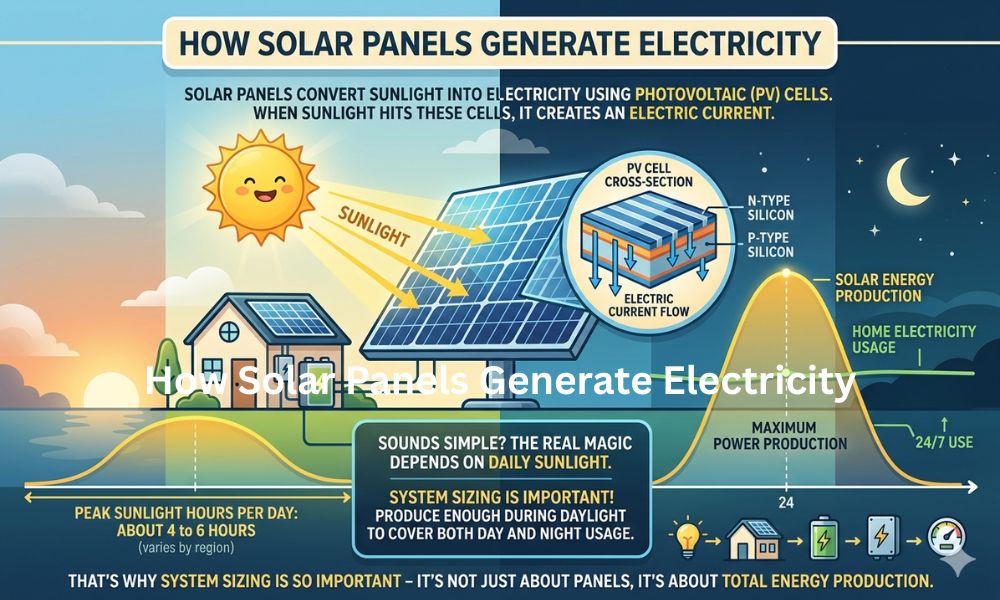
Solar panels work by converting sunlight into electricity using photovoltaic (PV) cells. When sunlight hits these cells, it creates an electric current. Sounds simple, right? But the real magic depends on how much sunlight your panels receive daily.
In most regions, homes get about 4 to 6 peak sunlight hours per day. That means your panels only produce maximum power during those hours. The rest of the day, output drops.
So if your home uses electricity 24/7, your solar system must produce enough energy during daylight hours to cover both day and night usage. That’s why system sizing is so important — it’s not just about panels, it’s about total energy production.
Average Number of Solar Panels Needed
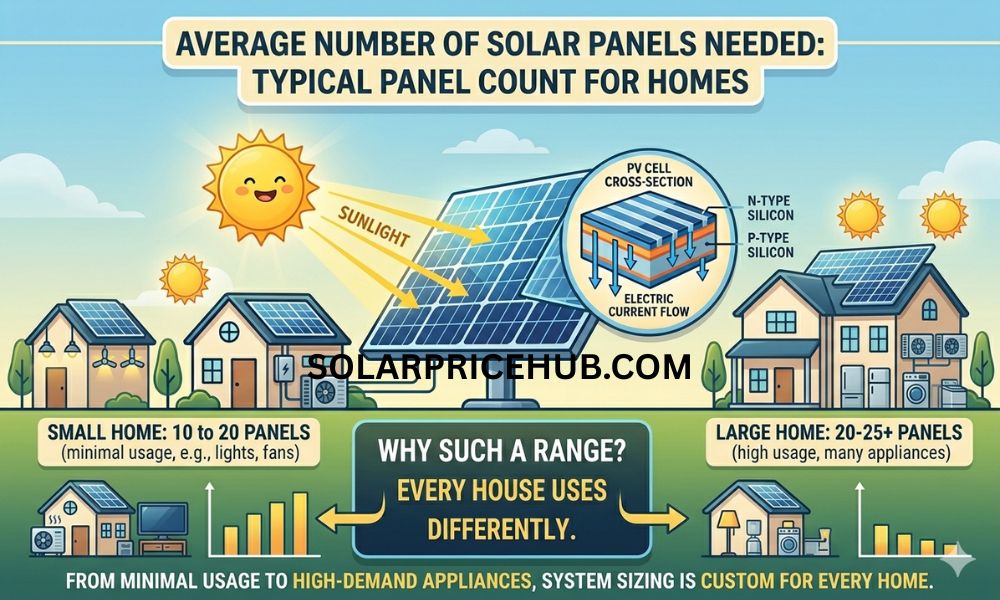
Typical Panel Count for Homes
Let’s get straight to the point. On average:
- Most homes need 10 to 20 panels
- Some need 16 to 23 panels, depending on usage
- Larger homes may require 20–25 panels or more
Why such a range? Because every house uses electricity differently. A home with air conditioners running all day will need more panels than a home using just lights and fans.
Small vs Medium vs Large Homes
Here’s a simple comparison to make things clearer:
| Home Size | Yearly Usage (kWh) | Panels Needed |
|---|---|---|
| Small Home | 6,000 kWh | 8–12 panels |
| Medium Home | 9,000 kWh | 12–18 panels |
| Large Home | 12,000 kWh | 18–25 panels |
This table gives you a rough idea, but remember — your actual number may vary depending on your lifestyle and appliances.
Key Factors That Affect Solar Panel Quantity
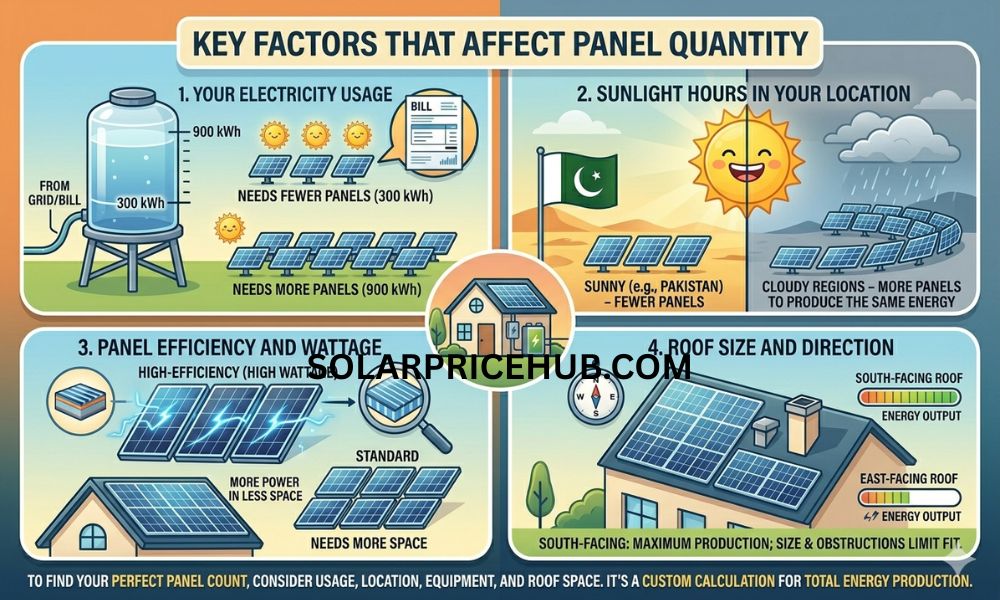
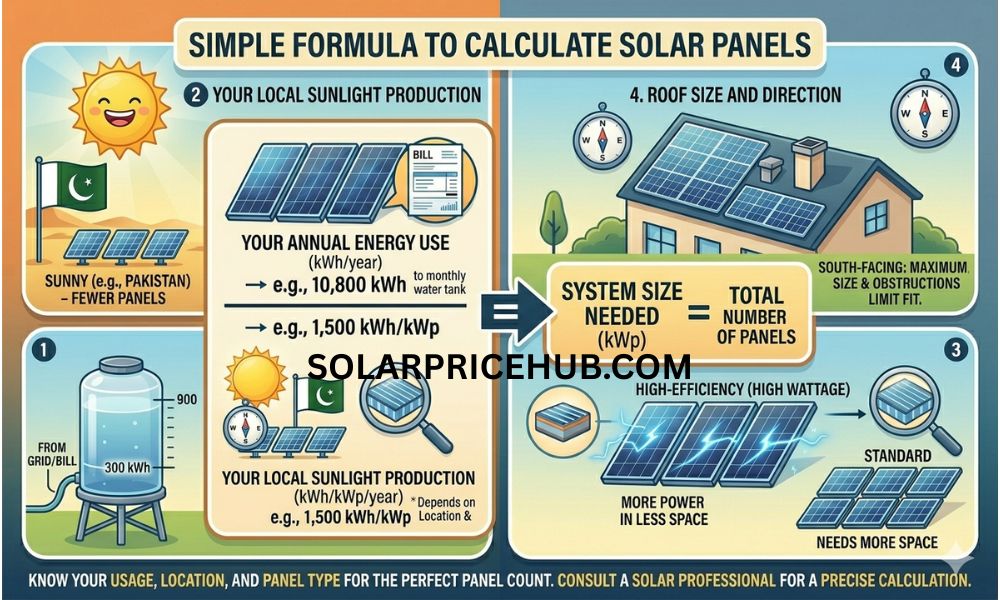
Your Electricity Usage
This is the most important factor. Your electricity bill tells the real story. If your home uses 900 kWh per month, you’ll need more panels than someone using 300 kWh.
Think of it like filling a water tank. The bigger the tank (your energy usage), the more water (solar panels) you need.
Sunlight Hours in Your Location
If you live in a sunny area like Pakistan, you’re actually lucky. More sunlight means fewer panels are needed. Homes in cloudy regions require more panels to generate the same electricity.
Panel Efficiency and Wattage
High-efficiency panels produce more power in less space. So if your roof is small, choosing high-watt panels is a smart move.
Roof Size and Direction
Even if you want 20 panels, your roof might only fit 12. Roof direction also matters — south-facing roofs produce more energy compared to east or west-facing ones.
Simple Formula to Calculate Solar Panels
Step-by-Step Calculation
Here’s a simple formula:
Number of Panels = Annual Electricity Usage ÷ (Sunlight Hours × 365 × Panel Wattage)
Real-Life Example
Let’s say:
- Your yearly usage = 9,000 kWh
- Sunlight = 5 hours/day
- Panel wattage = 400W
You’ll need around 15 panels to power your home.
Solar Panel System Size Explained
What Is a kW Solar System?
A solar system is measured in kilowatts (kW). For example:
- 3kW system = small home
- 5kW system = average home
- 10kW system = large home
Common System Sizes and Panel Count
| System Size | Panels Needed | Output |
|---|---|---|
| 3 kW | 8 panels | 4,000–5,000 kWh |
| 5 kW | 13 panels | 6,500–8,000 kWh |
| 10 kW | 25 panels | 13,000–16,000 kWh |
How Many Panels for Different House Sizes
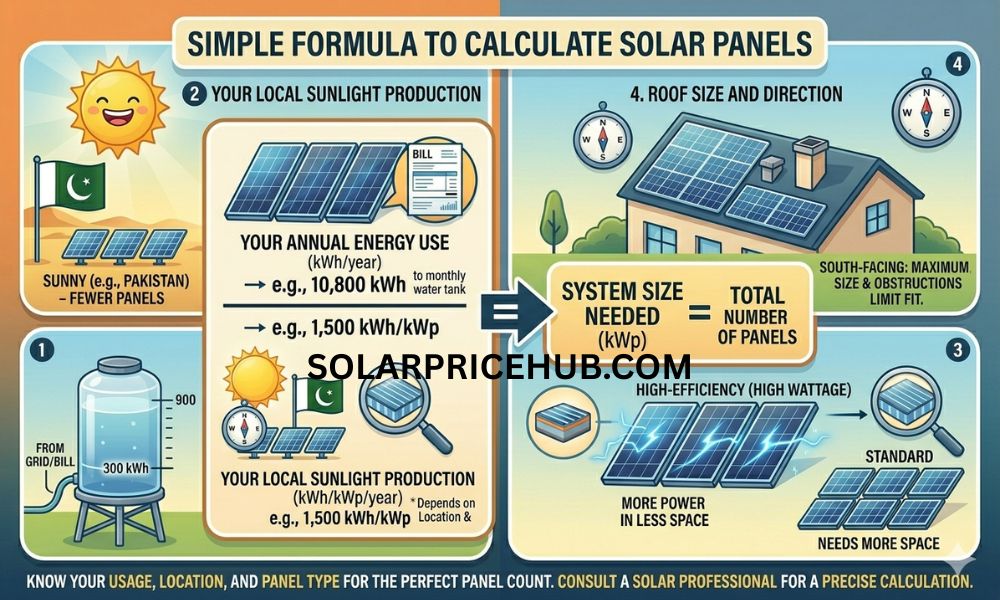
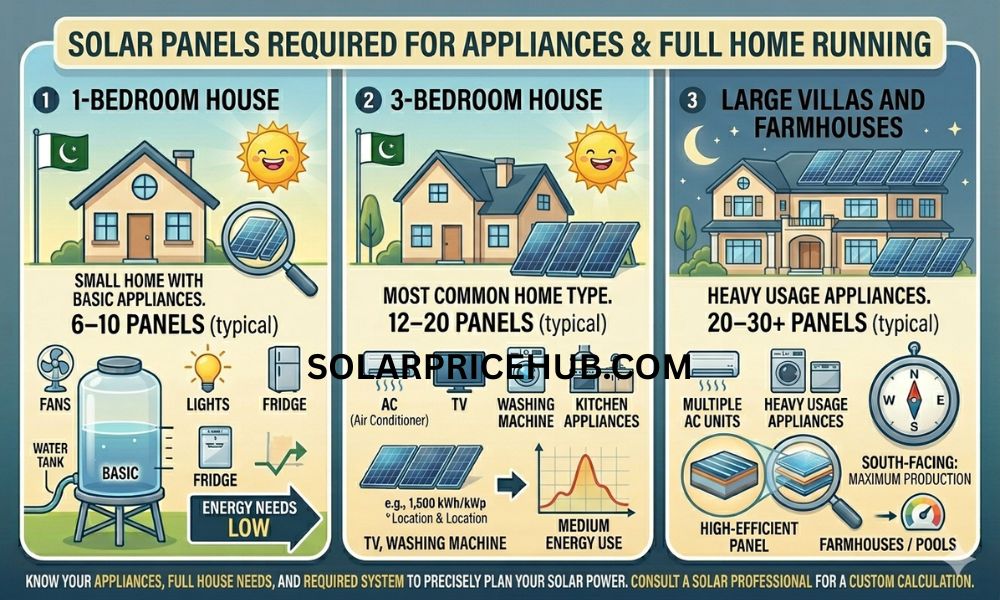
1-Bedroom House
A small house with basic appliances usually needs 6–10 panels. If you’re only using fans, lights, and a fridge, your energy needs stay low.
3-Bedroom House
This is the most common type of home. With AC, TV, washing machine, and kitchen appliances, you’ll need around 12–20 panels.
Large Villas and Farmhouses
Big homes with multiple AC units and heavy usage may require 20–30 panels or more.
Solar Panels Required for Appliances
AC, Fridge, and Fans
- 1 AC = 3–5 panels
- Fridge = 1–2 panels
- Fan = 1 panel per 2–3 fans
Running a Full House on Solar
Yes, you can run your entire home on solar. But you may need:
- Battery backup
- Net metering system
Without batteries, solar only works during the day.
Final words
There are at least 6 to 8 of 540w to 585w Solar Panels for a House to fulfill energy needs. A house always needs 3k to 4k watts of electricity, including an AC during summer and 2k watts during winter.
For a big family house, we need to install a 6 kW solar system at home that will generate enough power to run all the appliances.
For a 6kw solar system, we need to install 12 solar panels of 540w or 585w that will generate 6000 watts very easily during the day and also recharge batteries for night use.
This system will run all fans, lights, LEDs, washing machine, water pump, iron, fridge, and an AC as well.