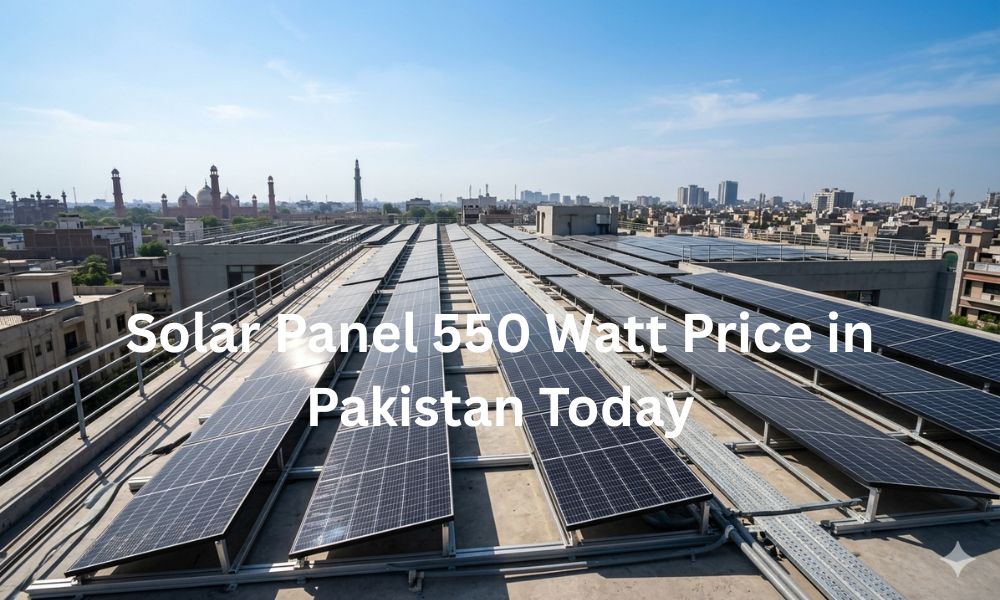
The solar panels are a demanding product in Pakistan because of the increasing prices of electricity bills and load shedding. 22 Oct 2026 The average electricity bill ranges from 8k to 15k rupees for a small house without running an AC. The average pay is only 35k rupees for workers in mills near Nemat Banaspati Ghee mill, which is very low.
22 Oct 2026 The Solar Panel 550 Watt Price ranges between 23k and 26k rupees, depending on the quality, brand, and availability in Pakistan. The per-watt price for Solar Panel 550 Watt ranges between 42 and 46 rupees, which I have checked on many shops in Lahore, Faisalabad, and Karachi.
Because of very high electricity billing prices, the poor workers are now moving on to generating free energy, so that’s why every one installing solar panels at home. These solar panels have the ability to generate electricity for 25 years with little care and maintenance.
My Personal Experience: A Solar Panel 550 Watt can generate 500 watts at a time with full sunlight, especially in summer, and about 3000 watts in a day.
It means that it will save our 100 rupees daily and 3000 rupees in a month by generating 90units of free energy.
How Many Appliances Can A Solar Panel 550 Watt solar panel run?
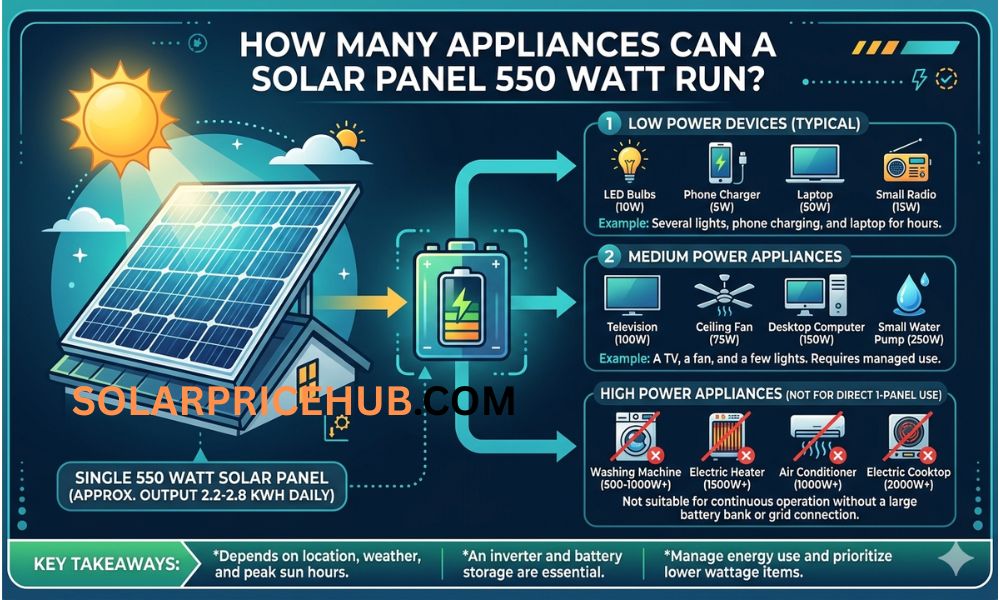
A 550 Watt Solar Panel can run some low-consumption tools or appliances at home, and here we will explore as follows.
- 2–3 DC Fans (or energy-efficient AC pedestal fans).
- 4–5 LED Bulbs (12W each).
- 1 LED TV (32–42 inches).
- Mobile charging for the whole family.
What Is a 550 Watt Solar Panel?
A 550 Watt solar panel is one of the most popular sizes in Pakistan today. It is not too small and not too big. It makes enough electricity to be really useful for homes, shops, and small businesses.
Think of it this way. Your ceiling fan uses about 75 watts. An LED TV uses about 100 watts. A 550-watt panel, in one full sunny day, can run these appliances for many hours, completely free.
In 2026, most 550W panels sold in Pakistan use a technology called Mono PERC. This just means the panel is very good at catching sunlight, even on slightly cloudy days.
My Personal tip: It works well in Lahore’s heat, Karachi’s humidity, and Islamabad’s milder weather, everywhere in Pakistan.
| Technical Specifications | Value |
| Peak Power Output (Pmax) | 550 Watts |
| Cell Technology | Mono PERC / N-Type TOPCon |
| Module Efficiency | 20.5% – 22.8% |
| Open Circuit Voltage (Voc) | 49.0V – 52.0V |
| Maximum Power Voltage (Vmp) | 41.0V – 44.5V |
| Short Circuit Current (Isc) | 13.5A – 14.5A |
| Maximum Power Current (Imp) | 12.8A – 13.5A |
| Dimensions (Approx.) | 2279 x 1134 x 35 mm |
| Weight | 27.5 kg – 30 kg |
| Glass | 3.2mm AR Coated Tempered Glass |
| Frame | Anodized Aluminum Alloy |
| Junction Box | IP68 Rated (3 bypass diodes) |
| Product Warranty | 12 Years |
| Performance Warranty | 25 Years (Linear output) |
| Operating Temperature | -40°C to +85°C |
550 Watt Solar Panel Price in Pakistan: Latest Rates 22 Oct 2026
Here, we will discuss all brands of 550W solar panels and their latest prices that are verified from many shops in Pakistan.
These rates range from 14,000 to 29,000, depending on the quality, brand and technology (Mono PERC, N-Type, or Bifacial) in Pakistan.
| Brand | Price Per Panel | Per Watt Rate | Grade |
|---|---|---|---|
| JA Solar 550W | Rs. 14,000 | Rs. 26/watt | A-Grade |
| Canadian Solar 550W | Rs. 14,850 – 15,400 | Rs. 27–28/watt | A-Grade |
| Jinko Solar 550W | Rs. 15,950 – 21,450 | Rs. 29–39/watt | A-Grade |
| Longi Solar 550W | Rs. 16,500 – 19,800 | Rs. 30–36/watt | A-Grade |
| Trina Solar 550W | Rs. 29,150 | Rs. 53/watt | A-Grade |
| JA Bifacial 550W | Rs. 29,700 | Rs. 54/watt | Tier-1 |
Important Note: Solar panel prices in Pakistan change every few weeks. They go up or down depending on the US dollar rate and government taxes. Always confirm the latest price from your local market before buying.
How Much Electricity Does One 550W Panel Make?
My Personal Experience: Pakistan is blessed with a lot of sunshine, about 5 to 6 hours of strong sun every day in most cities from Karachi to Lahore. Based on that, one single 550W solar panel produces solar energy as follows.
- Per day: 2.5 to 3.3 units of electricity
- Per month: 75 to 99 units
- Per year: 900 to 1,200 units
Now, let us turn those numbers into money. At today’s electricity rate of Rs. 50 to 60 per unit, one panel alone saves you Rs. 3,750 to Rs. 5,000 every single month.
Which Brand Is Best in Pakistan 2026?
There are a lot of solar panel brands available in Pakistan that are very popular as well as trending, but here we will discuss them one by one in detail.
My personal experience: I have experienced all solar panel brands and found that the Longi Solar brand is the most trusted and trending in Pakistan.
Longi Solar Panels: The Most Trusted Name
It is most informative news that Longi is the most popular solar brand in Pakistan as well as in the world. Walk into any solar market in Lahore, Karachi, or Islamabad, and you will find Longi panels everywhere. Why?
Because they work reliably, they last a long time, and the company stands behind its product with a 30-year warranty as well as an efficiency rate of more than 26%.
Price: Rs. 16,500 to Rs. 19,800 per panel
If someone in your family asks, “Which brand should we buy?” My opinion is that Longi is always a safe and smart answer in Pakistan to generate solar power.
Jinko Solar Panels: The World-Famous Choice
It is also informative news that Jinko Solar is one of the biggest solar companies in the entire world, as well as in Pakistan. Their solar panels work exceptionally well even when there is some shade or cloud cover.
They use a technology called Multi Busbar (MBB), which just means even if one small part of the solar panel is in shade, the rest still keeps making electricity normally to run tools.
Price: Rs. 15,950 to Rs. 21,450 per panel
Jinko is a great choice for homes that have nearby trees or buildings that sometimes shade the roof.
JA Solar Panels: The Best Budget Option
If your family is working with a tight budget, JA Solar is your best friend. It is the most affordable A-grade certified panel in Pakistan, starting at just Rs. 14,300.
And “affordable” does not mean bad quality here. JA Solar is a real Tier-1 brand trusted worldwide, also in Pakistan nowadays. These solar panels are also cheaper in Pakistan than Longi or Canadian solar panels.
Price: Starting from Rs. 14,300 per panel
This is the panel to choose if you want quality at the lowest possible honest price.
Canadian Solar Panels: Excellent Value
Canadian Solar panels are also the most demanding product in Pakistan, which has been making solar panels for over 20 years.
Their solar panels handle Pakistan’s extreme summer heat really well, even when your rooftop reaches 50 or 60 degrees Celsius in July and August, Canadian panels keep performing strongly.
Price: Rs. 14,850 to Rs. 15,400 per panel
Very close in price to JA Solar, with a long and trusted history. A solid choice.
Trina Solar and JA Bifacial: The Premium Options
These are more expensive solar panels for buyers who want the very best technology. Trina Solar uses half-cut cell technology that produces more electricity and handles shade better.
The JA Bifacial is special — it makes electricity from both the front AND the back of the panel, giving you 10 to 20% extra power for free.
Price: Rs. 29,150 to Rs. 29,700 per panel
These are best for commercial rooftops, factories, or homes where maximum output matters most.
A-Grade vs B-Grade Solar Panels in Pakistan 22 Oct 2026
This is one of the most important sections in this entire article. Many buyers in Pakistan make a very costly mistake here, so please read slowly.
When you go to buy solar panels, some sellers will offer you “cheap” panels at a very low price — maybe Rs. 10,000 to Rs. 13,000 per panel. These are called B-Grade panels. They look exactly like good panels from the outside. But inside, they have tiny cracks and defects.
Here is what happens with B-grade panels:
- They produce much less electricity than promised
- They have no proper warranty — if something breaks, the seller will not help you
- The government (DISCO/WAPDA) will reject your Net Metering application if you use B-grade panels
- They stop working well after 10 years instead of 25
So if someone offers you panels that are “Rs. 2,000 cheaper per panel” — walk away. On a 10-panel system, that Rs. 20,000 saving will cost you over Rs. 200,000 in losses over time.
Golden Rule: Always buy A-Grade panels with proper documents and a receipt.
Comparison Table: A-Grade vs. B-Grade 550W Solar Panels
| Feature | A-Grade Panel | B-Grade Panel |
| Quality Standard | Fully tested, 100% factory specifications, zero hidden defects. | Usually, none (or an unreliable shopkeeper’s verbal warranty). |
| Price Range (550W) | Rs. 14,300 – Rs. 21,450 | Rs. 11,000 – Rs. 13,500 |
| Performance Warranty | 25-year linear output guaranteed by the brand. | Usually, none (or an unreliable shopkeeper verbal warranty). |
| Net Metering Approval | Fully Eligible (Comes with official documentation). | Usually rejected by DISCOs due to a lack of verifiable paperwork. |
| Expected Lifespan | 25 – 30+ Years | 10 – 15 Years (Degrades much faster due to hotspots). |
| Documentation & Barcode | QR code matches factory database; full paperwork provided. | Always recommended for long-term savings. |
| Verdict | Minor micro-cracks, cell colour variations, or structural blemishes. | Barcodes are often scratched out, missing, or fake. |
How Many Panels Does Your Home Actually Need?
Check your monthly electricity bill. Find the number of “units” you used last month. Then use this simple guide:
| Monthly Units Used | System Size | Number of 550W Panels |
|---|---|---|
| 150 to 250 units | 1.5 to 2 kW | 3 to 4 panels |
| 300 to 400 units | 3 kW | 5 to 6 panels |
| 500 to 600 units | 5 kW | 9 to 10 panels |
| 700 to 900 units | 7 kW | 12 to 13 panels |
| 1,000+ units | 10 kW | 18 to 20 panels |
Most medium-sized Pakistani homes (3 to 4 bedrooms) use between 400 and 600 units per month. So a 5kW system with 9 to 10 panels is the most common setup.
What Is the Total Cost of a Complete Solar System?
Buying the panels is only one part. A complete solar system also needs other things. Here is a realistic cost breakdown for a 5kW system using 550W panels:
| Item | Cost |
|---|---|
| 9–10 x 550W Solar Panels (A-Grade) | Rs. 1,30,000 – 2,15,000 |
| 5kW Hybrid Solar Inverter | Rs. 80,000 – 1,50,000 |
| Solar Battery Backup (optional) | Rs. 80,000 – 1,50,000 |
| Iron Frame and Mounting Stand | Rs. 25,000 – 40,000 |
| Wires and Cables | Rs. 15,000 – 25,000 |
| Labour and Installation | Rs. 20,000 – 50,000 |
| Net Metering Application Fee | Rs. 10,000 – 20,000 |
| Total WITHOUT battery | Rs. 2,70,000 – 4,80,000 |
| Total WITH battery | Rs. 3,50,000 – 6,30,000 |
This may sound like a lot. But remember — this system will save your family Rs. 37,000 to Rs. 50,000 every single month. So it pays for itself in less than one year, and then makes you free electricity for 24 more years.
What Is Net Metering? (How to Get Paid for Your Solar!)
Net metering is a government programme that allows you to sell your extra solar electricity back to WAPDA or your local electricity company (LESCO, MEPCO, IESCO, etc.).
Here is how it works in simple words:
During the day, your solar panels make electricity. If your panels make more electricity than your home uses right now, that extra electricity goes into the main power line (grid).
WAPDA counts how many units you sent them. Later, when you need electricity at night or on a cloudy day, those units are subtracted from your bill.
Many Pakistani families who have net metering now receive a Rs. 0 electricity bill every month. Some even receive a credit — meaning WAPDA owes them money!
To get net metering, you need:
- A-grade documented solar panels
- A licensed (AEDB) installer
- A hybrid or on-grid inverter
- An application submitted to your local DISCO office
On-Grid, Off-Grid, or Hybrid — Which System Is Right for You?
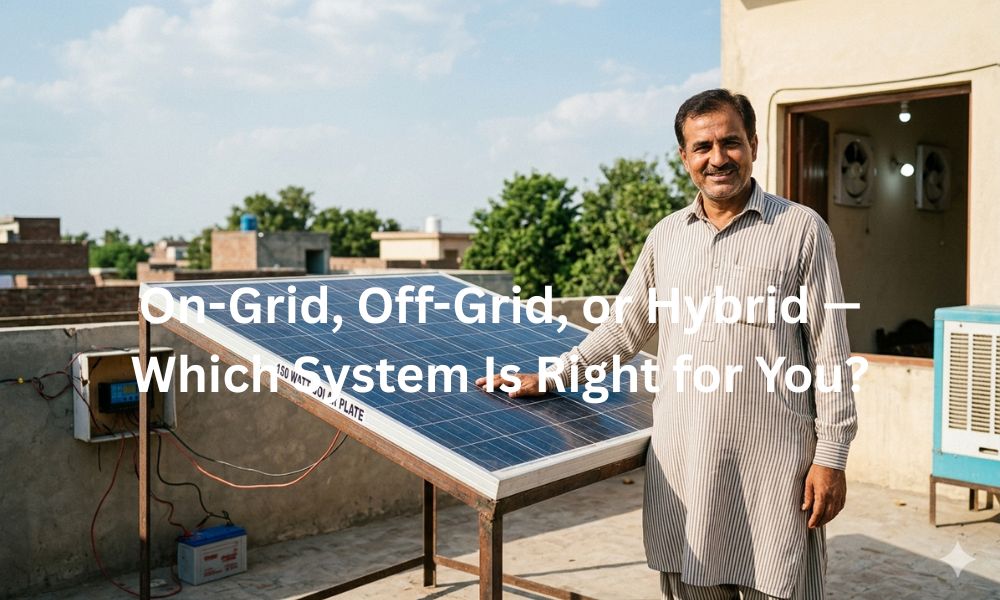
You will hear these three words a lot when shopping for solar. Here is what they mean:
An on-grid system means your solar is connected to the WAPDA line. No battery. Lowest cost. Works best if you have less than 4 hours of load shedding per day. Great for net metering.
An off-grid system means no connection to WAPDA at all. You need a big battery bank. Good for villages or areas with 8 to 12 hours of load shedding. Higher cost because of batteries.
The hybrid system is the most popular choice in Pakistan in 2026. It is connected to the grid AND has a battery. During load shedding, your battery keeps the lights on. During the day, solar powers your home and charges the battery. Anything extra goes to the grid through net metering.
For most Pakistani homes, a hybrid system is the best choice.
How Long Before Solar Pays for Itself?
| System | Monthly Saving | Yearly Saving | Payback Time |
|---|---|---|---|
| 1 Panel only | Rs. 3,750 – 5,000 | Rs. 45,000 – 60,000 | 4 to 5 months |
| 3kW (6 panels) | Rs. 22,500 – 30,000 | Rs. 2,70,000 – 3,60,000 | 10 to 14 months |
| 5kW (10 panels) | Rs. 37,500 – 50,000 | Rs. 4,50,000 – 6,00,000 | 8 to 12 months |
After the payback period, every unit your solar system makes is pure savings. Zero cost. Free electricity. For 20 to 25 years.
There is no investment in Pakistan today that gives you this kind of return in this short a time.
5 Things to Always Check Before Buying
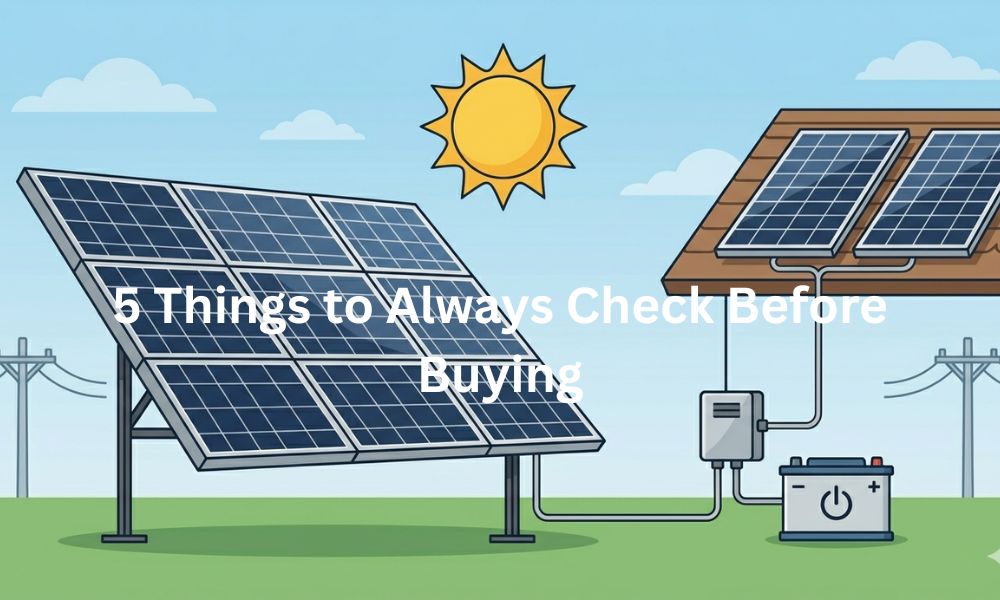
1. Ask for Documents. Every real A-grade panel comes with an official datasheet and receipt. If the seller cannot provide these, do not buy.
2. Verify the Serial Number Online. Every panel has a serial number printed on the back. You can type it on the brand’s official website to confirm it is genuine. This is free and takes 2 minutes.
3. Compare Per-Watt Price, Not Just Total. Divide the panel price by 550 to get the per-watt rate. Compare brands using this number — not the total price. This is the only fair comparison.
4. Use an AEDB-Licensed Installer. The government gives a special licence (AEDB) to solar installers who are properly trained. Always ask for your installer’s AEDB number. This also protects you if you want to apply for net metering.
5. Check Your Roof Direction South-facing rooftops get the most sunlight in Pakistan. East or west-facing rooftops produce around 15 to 20% less electricity. North-facing is not recommended. Check this before buying.
Mistakes Pakistani Buyers Commonly Make
Learning from others’ mistakes is always smart. Here are the most common solar buying mistakes in Pakistan:
Buying B-grade panels to save money. As explained earlier, this almost always costs you more in the long run. Avoid it completely.
Buying a mismatched inverter. If you have 10 panels of 550W each (total 5,500W), you need at least a 5kW inverter. A 3kW inverter will waste your money and damage the system over time.
Not getting a written warranty. Your installer and the panel dealer should both give you a written warranty. No paper = no protection.
Ignoring the roof’s weight capacity. Ten 550W panels plus the iron frame weigh around 300 kilograms. Older or weaker rooftops need to be checked by an engineer before installation.
Buying too small a system. If your bill is Rs. 20,000 per month and you install a 2kW system, you will still pay a large bill. Always size the system for your actual usage.
Final words
The Solar Panel 550 Watt Price ranges between 22k to 26k rupees, depending on the quality, brand, and availability in Pakistan.
The per-watt price for Solar Panel 550 Watt ranges between 40 and 46 rupees, which I have checked on many shops in Lahore, Faisalabad, and Karachi.
Because of very high electricity billing prices, the poor workers are now moving on to generating free energy, so that’s why every one installing solar panels at home.
These solar panels have the ability to generate electricity for 25 years with little care and maintenance.