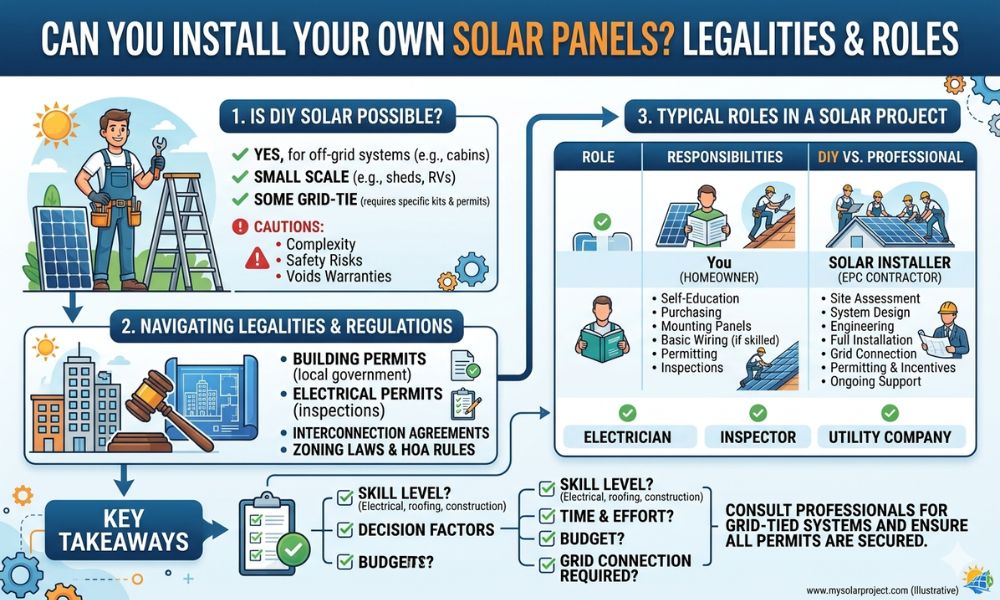
Yes, it is legal to install your own solar panels by getting some knowledge about electricity and how solar panels work. You don’t need any specialized diploma or certificate to install solar panels from the government. There are some roles and precautions you need to understand before installing solar panels at home.
Yes, it is legal to install your own solar panels in many nations, like the U.S. and the UK, but it needs some strict adherence to building, major electrical, and utility regulations.
By installing our solar panels, we have many benefits, including saving a lot of money and time. According to some installers, by installing solar panels ourselves, we can save an average of $1,000 to $5,000, depending on the size and number of solar panels in the USA and the UK.
Solar panel installation cost ranges from 100$ to 300$ nowadays in the USA and uk. In these nations, labor costs are very high, which is why many people want to install solar panels themselves.
Here, in this great article, we will explain everything about installation steps, benefits, pros & cons, and much more.
Why Homeowners Install Their Own Solar Panels?
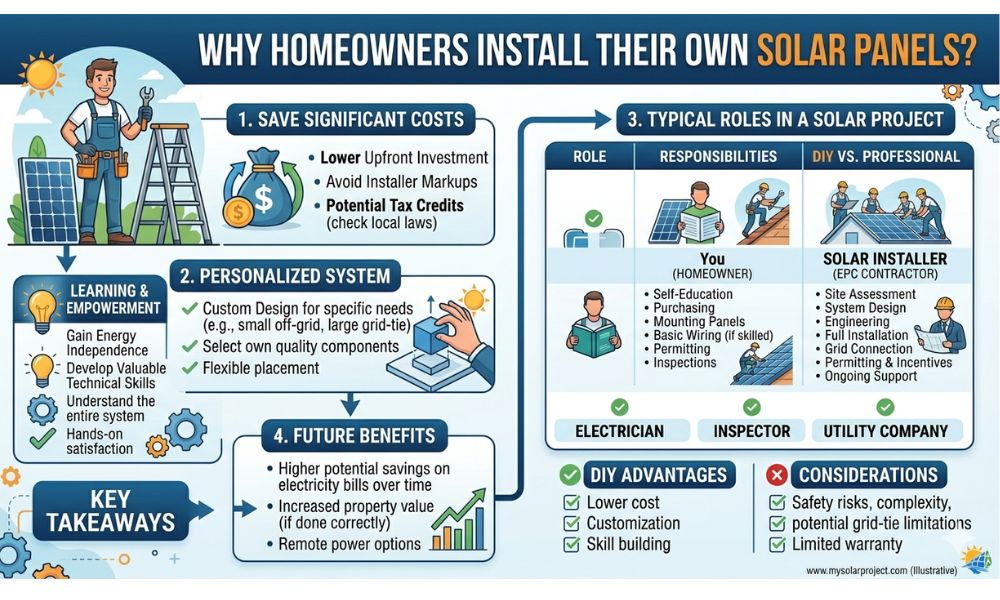
So why do people still consider installing solar panels themselves? Because of cost savings and independence.
It is very important to know that in the United States, the average cost of installing a solar system ranges between $2.5 to $3.5 per watt, meaning a 6kW system can cost around $15,000–$21,000 before incentives.
It is also important to note that in the UK, a typical 4kW system costs between £5,000 and £7,500. These numbers can make anyone think: “Can I cut down installation costs by doing it myself?”
With a DIY installation of solar panels, we can reduce costs by 10% to 20%, mainly by eliminating labor charges.
Key Regulations & Policies You Must Know
Net Metering vs Net Billing Explained
This is also very informative news that many nations, like the USA and Pakistan, have a net metering system, where exported electricity is credited at the same rate as the electricity you consumed.
By net metering, installers can earn a lot of money by selling their extra solar energy that is a good way to earn at home in Pakistan.
But recent updates introduced net billing, which changes the economics, which means that you will charge a smaller amount from the government per unit in Pakistan nowadays.
Under net billing:
- You still export electricity to the grid
- But the rate you get paid is lower than what you pay for electricity
DISCO & NEPRA Major Requirements
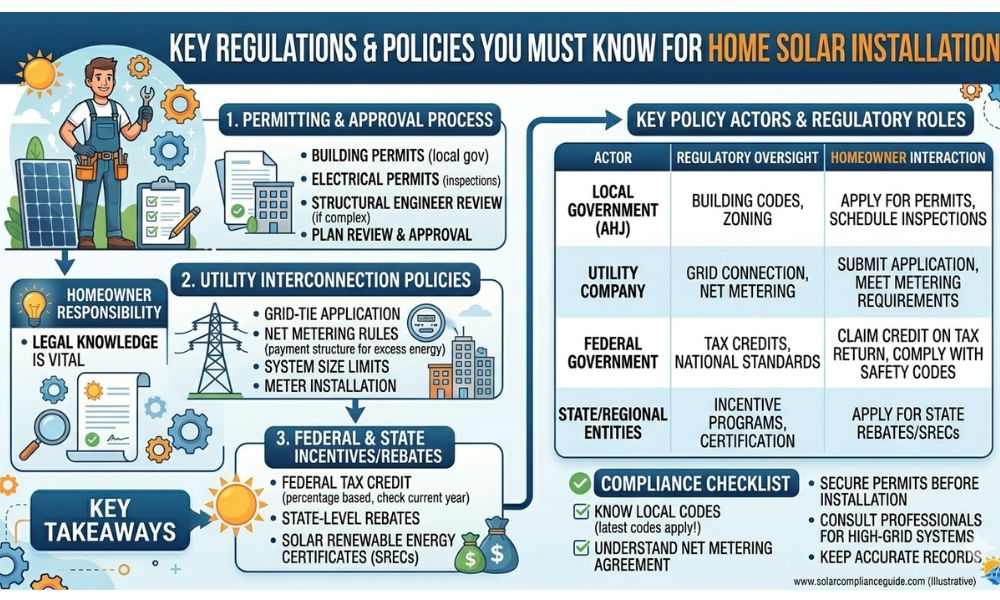
To legally connect your system to the electricity company, installers need to meet some DISCO & NEPRA requirements that are as follows.
- Minimum system size: 1 kW
- Must use certified inverters and safety equipment
- Proper earthing, breakers, and wiring are required
- Inspection by DISCO authorities is mandatory
Major Technical Requirements for Solar Panel Installation
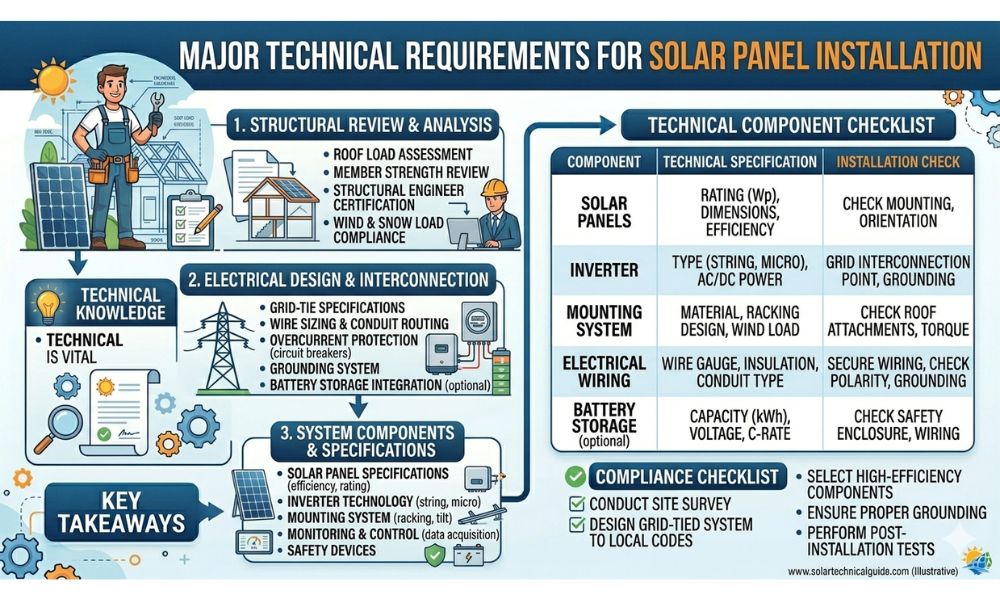
There are also some important Technical Requirements for Solar Panel Installation, and here we will discuss them as follows.
Basic Components Needed
A solar system consists of many components that will join to gether and make a solar panel system to generate electrcicity and here we will discuss them.
- Solar panels (40–45% of total cost)
- Inverter (20–25%)
- Mounting structure
- Wiring and protection systems
- Optional battery backup
Each component must be carefully selected and matched. A mismatch can reduce performance or damage the system.
Safety Standards & Compliance For Proper Installation
Proper installation of solar panels requires many Safety Standards & Compliance nowadays, and here we will discuss them.
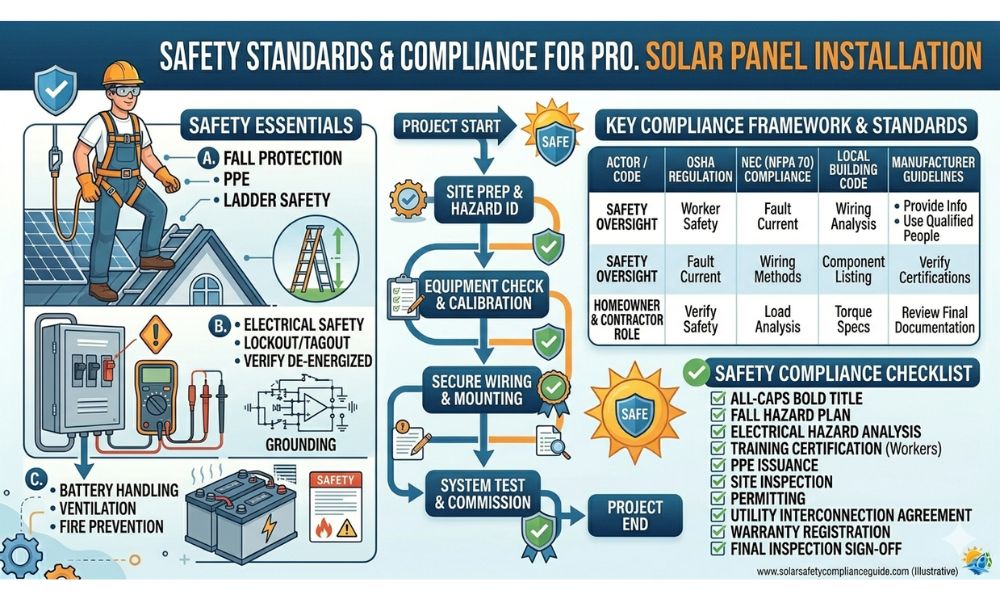
- Correct tilt angle (around 25–30° in Pakistan)
- Strong mounting to withstand wind
- Fire protection systems
- Proper cable sizing
Skipping any of these can lead to serious consequences.
Major Roles Involved in Solar Panel Installation
There are also many Major Roles Involved in Solar Panel Installation, and here we will discuss them one by one as follows.
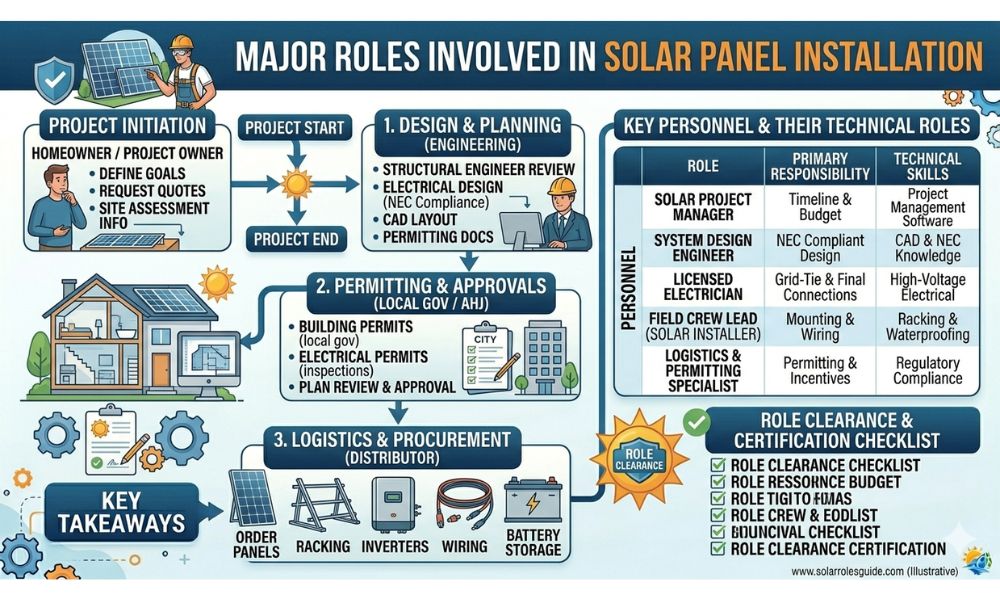
- Design the system for maximum efficiency
- Ensure compliance with regulations
- Handle approvals and inspections
- Provide warranty and after-sales support
Major Benefits of Installing Solar Panels on Your Own
There are also many Benefits of Installing Solar Panels on Your Own, and here we will explore them one by one as follows.
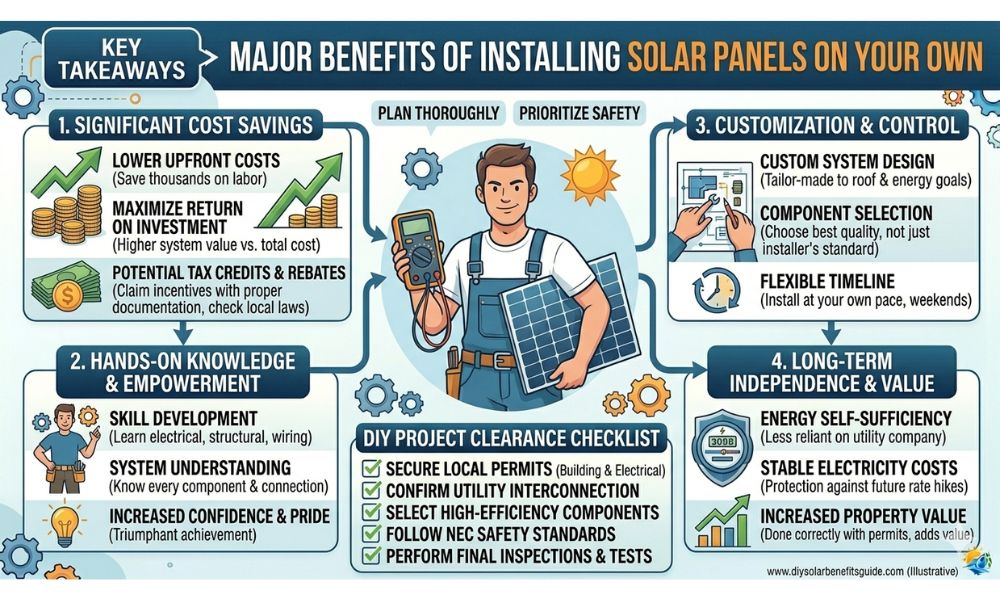
Cost Savings on Installation
It is very important to note that one of the biggest advantages of installing solar panels yourself is the money you save on labor costs that may be between 100$ to 200$ nowadays in the USA, UK, and China.
It is very important to note that Professional installation can add a significant amount to your total budget, so handling the setup on your own helps reduce overall expenses, and therefore, many people install their own solar panels.
Full Control Over System Design
It is also very informative news that when you install your own solar system, you have complete control over every component and decision. You can choose the type of panels, inverter, and layout that best suits your energy needs and budget.
This flexibility allows you to create a customized system instead of relying on pre-designed packages offered by solar companies to save money as well as time.
Valuable Hands-On Learning Experience
It is also important to note that DIY solar installation gives you a deep understanding of how solar energy systems work and allows you to make a living in many nations. You learn about wiring, panel placement, and energy production, which can be very useful in the long run. This knowledge helps you handle maintenance and minor issues without depending on technicians.
Greater Energy Independence
It is also very important to note that installing your own solar panels can give you a strong sense of energy independence. You become less reliant on utility companies and rising electricity prices. It’s empowering to know that you’re generating your own clean energy and taking control of your power supply.
Flexible Installation and Upgrades
It is also informative news that another benefit is the freedom to install and upgrade your system at your own pace. You can start small and expand later as your budget allows. This flexibility makes solar installation more manageable and less financially stressful over time.
Cost Comparison – DIY vs Professional Installation
Solar Panel Costs in the USA (2026)
| System Size | Professional Cost | DIY Cost |
|---|---|---|
| 5kW | $12,500 – $17,500 | $10,000 – $14,000 |
| 10kW | $25,000 – $35,000 | $20,000 – $28,000 |
Solar Panel Costs in the UK (2026)
| System Size | Professional Cost | DIY Cost |
|---|---|---|
| 3kW | £4,500 – £6,000 | £3,500 – £5,000 |
| 5kW | £6,500 – £8,500 | £5,000 – £7,000 |
When Should You Avoid DIY Solar?
DIY solar isn’t for everyone. You should avoid it if:
- You lack electrical experience
- You want government incentives
- Your roof is complex
- Safety is a concern
Step-by-Step DIY Installation Process Of Solar Panels
There are also many important Step-by-Step DIY Installation Process Of Solar Panels, and here we will discuss them one by one.
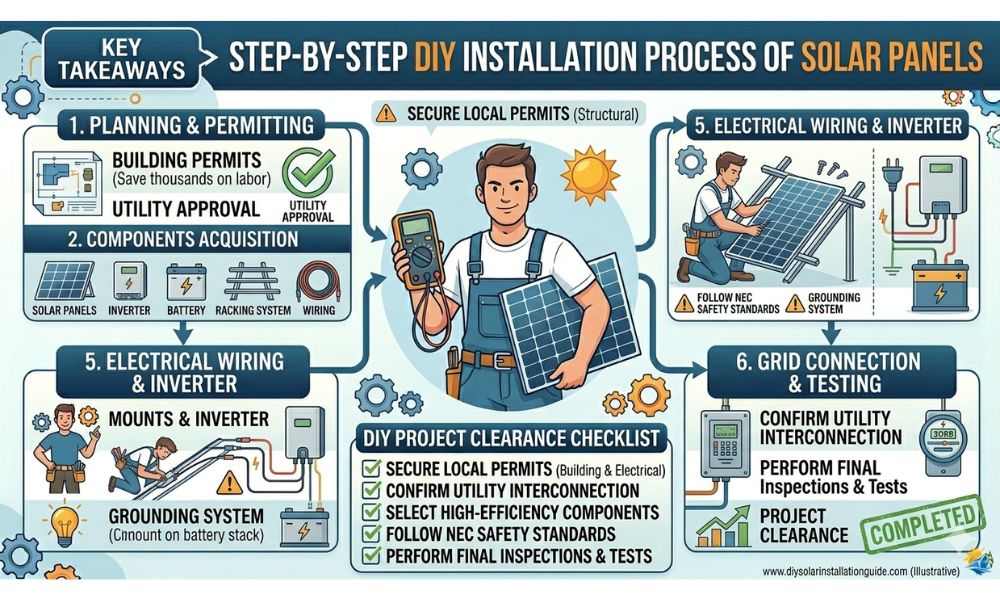
1. Planning and Energy Assessment
The first step in a DIY solar panel installation is understanding your energy needs, which may be 4kw or 6kw to run a home. Take a close look at your electricity bills to determine how much power your home consumes monthly, and in this way, you understand how many solar panels you need to install.
2. System Design and Equipment Selection
It is also important to note that once you know your energy requirements, the next step is to design your solar panel system at home. This includes selecting the right solar panels, inverter, mounting structure, and wiring components.
It is also very informative news that Make sure all equipment is compatible and meets safety standards. Choosing high-quality components is very important because your system is expected to last 20–25 years.
3. Obtaining Permits and Approvals
It is the most important step that before starting installation check your local regulations and apply for any required permits or approvals. In many countries, like the USA and UK, you need permission for grid-connected systems.
It is noted that skipping this step can lead to fines or issues when connecting your system to the grid from the electricity company. Even if you are doing a DIY installation, legal compliance is a must.
4. Installing the Mounting Structure
The mounting structure is the foundation of your solar system that will protect your solar panels for a longer time. It holds the panels securely on your roof. Install it carefully, ensuring it is properly aligned and firmly attached to withstand wind and weather conditions.
The angle is mostly 30, and the direction is mostly south of the structure, which should be optimized to capture maximum sunlight throughout the day.
5. Solar Panel Installation
After setting up the mounting structure, you can install the solar panels. Secure them tightly and connect them in series or parallel, depending on your system design.
This step requires attention to detail because improper connections can affect performance and safety.
6. Wiring and Inverter Connection
Next, connect the panels to the inverter using proper wiring. The inverter converts the DC electricity produced by the panels into usable AC electricity for your home. Ensure all connections are safe, insulated, and compliant with electrical standards. This is one of the most critical steps, as mistakes here can lead to system failure or hazards.
7. Grounding and Safety Setup
Safety should never be ignored. Proper grounding and earthing protect your system from electrical faults and lightning. Install circuit breakers, surge protection devices, and other safety equipment to ensure your system operates securely.
8. Testing and Inspection
Before using your system, test it thoroughly to make sure everything is working correctly. Check voltage levels, connections, and overall performance. In many cases, an official inspection is required before connecting to the grid. Passing this step ensures your system is safe and compliant.
9. Grid Connection (If Applicable)
If you plan to connect your system to the grid, this step involves coordinating with your local utility company. They will review your system and approve the connection. In some regions, a licensed electrician may be required for this final step.
10. Monitoring and Maintenance
After installation, regularly monitor your system’s performance. Keep the panels clean and check for any issues in wiring or connections. Routine maintenance helps maintain efficiency and extends the lifespan of your solar system.
Final words
Yes, it is legal to install your own solar panels by getting some knowledge about electricity and how solar panels work. You don’t need any specialized diploma or certificate to install solar panels from the government. There are some roles and precautions you need to understand before installing solar panels at home.
Solar panel installation cost ranges from 100$ to 300$ nowadays in the USA and uk. In these nations, labor costs are very high, which is why many people want to install solar panels themselves
FAQs
Cost to install your own solar panels
Cost to install your own solar panels is only 1$ to 1.5$ per watt in the USA, UK, and others, and for 5kw solar panel system 6000$ to 7000$ little high. Reduce the labor costs by installing your own solar panels at home, but the costs of solar panels, wires, frames, and shipping are included.
How much do solar panels cost for a 3,000 square foot house?
It ranges from 15,000$ to 20,000$ nowadays, depending on the quality and brand of solar panels, inverters, batteries, pipes, and others. For a 3,000 square foot house, we need at least 10kw solar system at home.
How long can a house run 100% on solar?
Yes, we can run our house 100% on solar panel power by storing energy in batteries during the day. During the day, we can run our house for 8 to 10 hours, and then at night run on batteries that are charged from solar energy during the day.
For that purpose, we need to install a 10 to 12kw solar system that can run the house as well as charge the batteries for night backup. In my opinion, the AC will not run at night because it needs a huge amount of energy.
Why is it so hard to sell a house with solar panels?
Why is it so hard to sell a house with solar panels? It is because of high pricing, because solar panels are also included in this price. According to solar panel installers, a 20 to 30% pricing will be high.
I am Muhammad SHAHID, and my education is Masters in IT at GCUF. Muhammad Shahid is a passionate solar energy researcher, writer, and renewable energy enthusiast with years of experience in the solar industry. He specializes in providing easy-to-understand, practical, and up-to-date information about solar panels, solar systems, and energy-saving solutions in Pakistan.